
 Share this
Summary
India and the US appear to be nearing a trade agreement, but disagreements over market access for genetically modified (GM) soybean and corn continue to complicate negotiations. India is considering alternatives that protect farmer interests while meeting industry needs, especially in feed, ethanol, and edible oils. This article explores what India’s stance on GM imports could mean for future trade and domestic agriculture.
Trade Dynamics Between India and the US
Trade discussions between India and the United States have intensified in recent months, with speculation growing that both nations are close to finalizing a bilateral trade deal. One of the central sticking points has been Washington’s push for market access for its GM soybean and corn.
Trade signals from Indian Commerce Minister Piyush Goyal - who said the country will announce “good news” once a fair, balanced agreement is reached - suggest that New Delhi is treading cautiously. Prime Minister Narendra Modi has also reiterated that farmer interests will not be compromised, reinforcing India’s hesitancy to open the gates for GM crop imports.
GM Crop Access: India’s Cautious Balancing Act
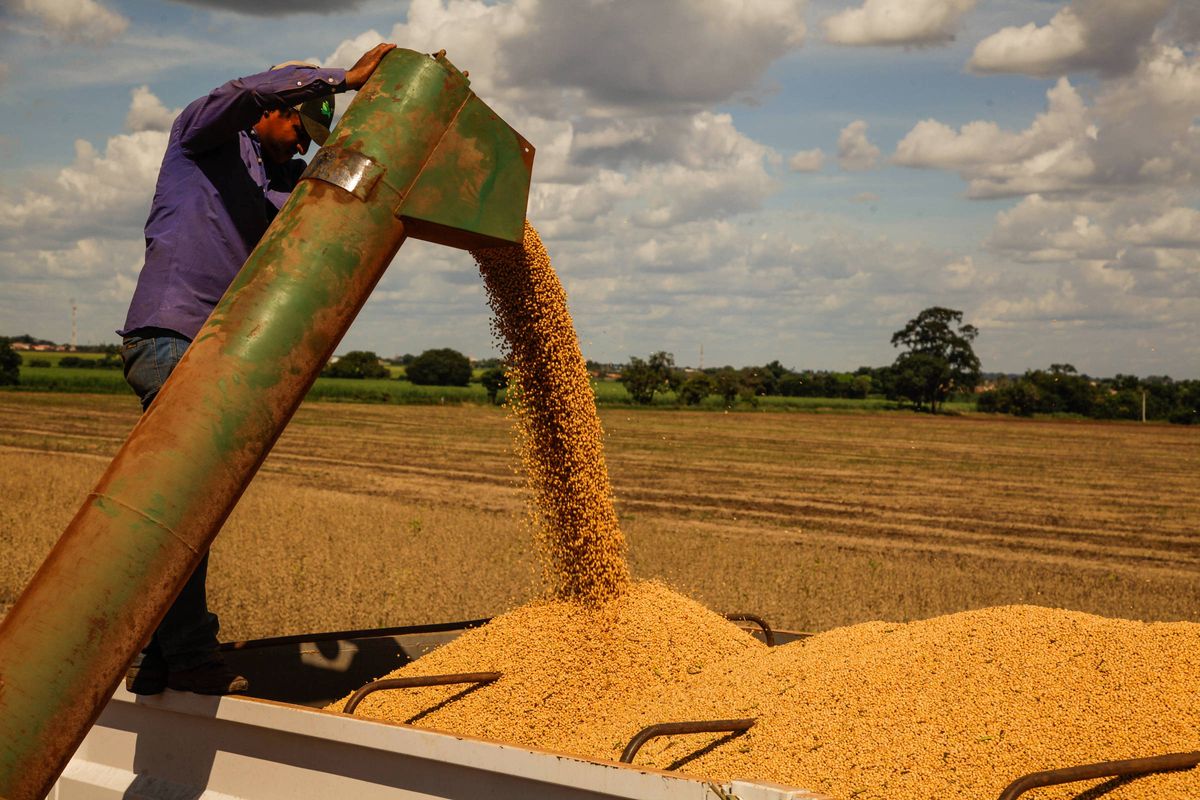
GM crop imports, particularly soybeans and corn, remain sensitive due to concerns around farmer livelihoods and consumer acceptance. GM soybean and corn access has therefore not progressed as the US expected.
GM tensions may ease slightly, given that China has already assured purchases of 25 million tonnes of soybeans annually from the US between 2026 and 2028, giving Washington some leeway in negotiations with New Delhi.
Soymeal as a Safer Alternative to GM Soybean Imports
Soymeal imports offer a practical middle ground. Soymeal, unlike whole GM soybeans, contains no living genetically modified organisms after processing.
Soymeal has precedent:
- In 2021, India allowed the import of 1.2 million tonnes of soymeal derived from GM soybeans due to shortages in poultry and livestock feed.
- The Delhi High Court permitted the imports after the government clarified that no live GM material remains in soymeal.
Soymeal could again serve as a strategic choice for strengthening feed supply without directly impacting soybean farmers or violating domestic GM norms.
Corn Imports: The Ethanol Opportunity
Corn imports, especially GM corn could fit into India’s increasing push for ethanol production.
Corn is currently imported under a Tariff Rate Quota (TRQ) of 500,000 tonnes at a reduced 15% duty, compared to the usual 50% on standard imports.
Corn for ethanol is considered less contentious due to its industrial use, offering India a controlled, low-risk way to accommodate US demands without undermining farmer sentiment.
Policy Landscape: Edible Oils and Domestic GM Cottonseed Oil
Policy direction on edible oils adds another dimension. India already imports around 5 million tonnes of soybean oil annually, most of which is derived from GM soybeans. Since the oil contains no live GM organisms, it is widely consumed without regulatory concerns.
Policy considerations also include domestic cottonseed oil. Over 96% of India’s cotton production comes from Bt (GM) cotton, and 1.3 to 1.4 million tonnes of its washed cottonseed oil are consumed within the country every year.
Policy clarity is evolving, as the Food Safety and Standards Authority of India (FSSAI) has only recently floated draft guidelines for labeling products originating from GM sources.
Conclusion
India’s approach to GM imports appears measured, pragmatic, and aligned with protecting farmer interests while addressing industry requirements. Allowing soymeal imports and restricted GM corn volumes for ethanol could offer a balanced path forward in trade negotiations with the US. Meanwhile, the continued import of soybean oil and domestic use of cottonseed oil illustrate that India is not fully closed to GM-derived products, only cautious about live GM organisms entering the food and feed chain.
A carefully calibrated policy will ensure India maintains agricultural stability while engaging constructively in global trade.