
 Share this
Summary
Early signs of renewed traffic through the Suez Canal are beginning to emerge after nearly two years of disruption. With shipping majors cautiously testing the route following a sustained ceasefire in the Red Sea region, the canal’s gradual reopening could significantly reduce transit times, ease capacity constraints, and reshape freight, energy, and commodity markets heading into 2026.
Suez Route Sees First Signs of Revival
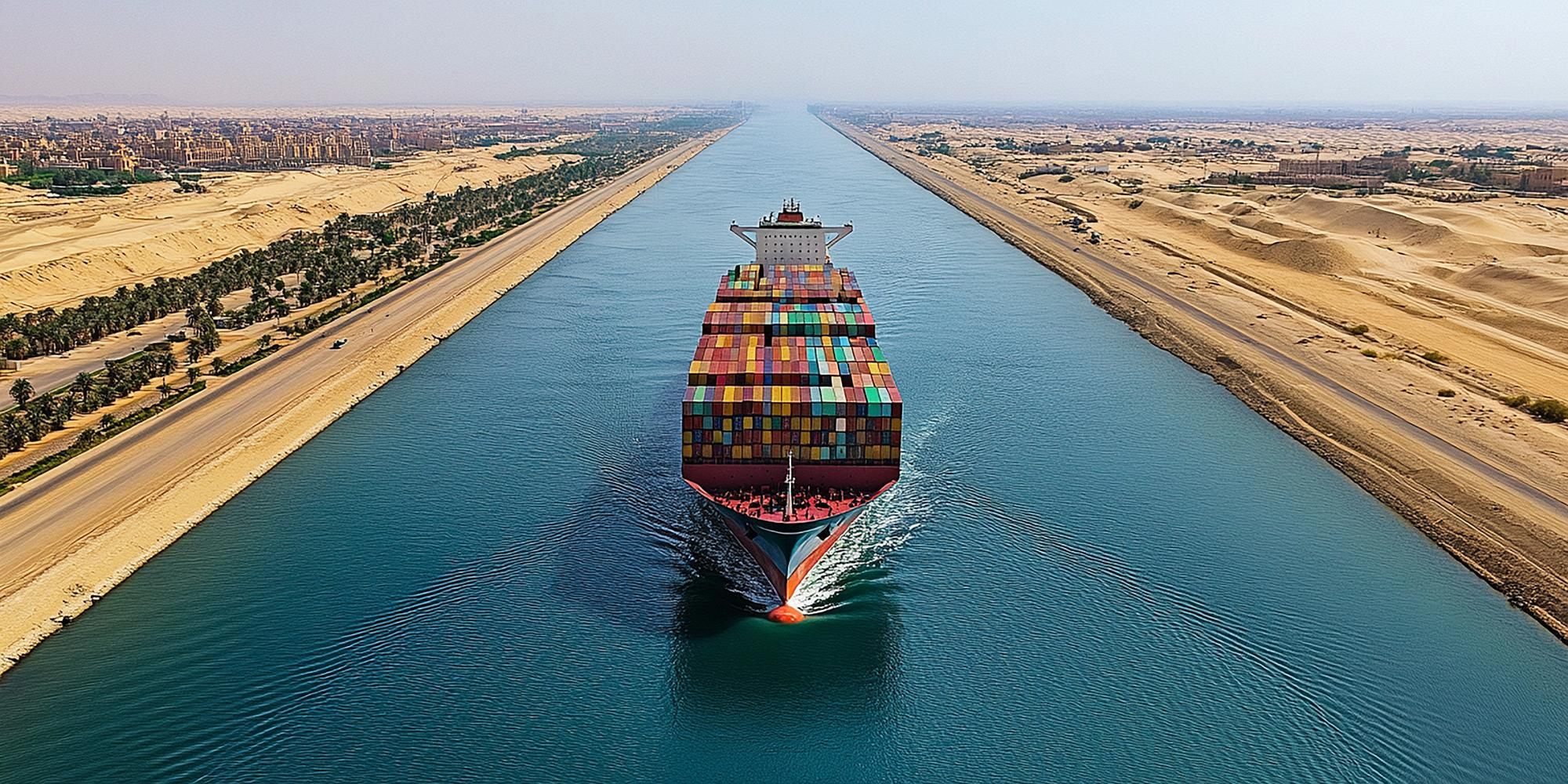
Suez Canal traffic may be nearing a turning point. French shipping giant CMA CGM SA, the world’s third-largest container carrier, has announced plans to launch a regular shipping service from India to the eastern United States via the Suez Canal early next year.
Suez routing marks a major shift after nearly two years of vessels avoiding the canal and detouring around the southern tip of Africa due to security concerns in the Red Sea.
Shipping Firms Test Stability After Ceasefire
Shipping companies are cautiously re-evaluating the route following a US-brokered ceasefire between Israel and Hamas that has held since September.
Shipping through the canal was largely suspended after November 2023, when attacks by Yemen-based Houthi rebels targeted commercial vessels in the Red Sea. Multiple ships were damaged or lost, and several seafarers were killed, forcing operators to reroute traffic despite higher costs.
Logistics Costs Rise Without the Suez Canal
Logistics operations have been under strain since the closure. The Suez Canal typically handles 15 per cent of global goods trade and nearly 30 per cent of global container traffic.
Logistics firms have faced:
• An additional 10 days of sailing time via the African route
• Higher insurance premiums
• Millions of dollars in extra fuel and operational costs
ING Bank estimates that the longer voyages have absorbed around 6 per cent of global fleet capacity, tightening supply across shipping markets.
Global Shipping Sector Already Under Stress
Global shipping has struggled since the pandemic, with multiple disruptions compounding the pressure.
Global trade routes were affected by the Sino-US trade war, the temporary grounding of vessels in the Suez Canal, and drought-related restrictions at the Panama Canal during 2023–24. The Red Sea crisis further intensified these challenges.
Risks Remain Despite Improved Traffic Data
Risks remain high even as vessel movements increase. Bloomberg data shows November saw the highest number of Suez crossings in over 18 months, despite the canal officially remaining closed.
Risks that shipping firms continue to monitor include:
• Whether the ceasefire holds and regional tensions stay contained
• The possibility of sudden disruptions forcing vessels back to African routes
• Persistently high insurance costs for Suez transits
Industry experts, including Bloomberg’s Javier Blas, suggest operators may adopt a wait-and-watch approach for the next few quarters.
Freight Rates and Commodities Face Downside Pressure
Freight markets could see major shifts if the Suez Canal fully reopens.
Freight costs are already down nearly 50 per cent since the start of the year. A return of the Suez route would free up the 6 per cent fleet capacity currently tied up in longer voyages, likely pushing rates even lower.
Freight deflation could also weigh on crude oil prices and broader commodity markets as transport costs ease.
Fuel Prices Reduce Incentive to Rush Back
Fuel prices are at their lowest levels in five years, reducing the urgency for shipping companies to immediately abandon African routes.
Fuel affordability means time savings remain the primary advantage of the Suez Canal for now, while insurance premiums continue to limit the route’s attractiveness.
Conclusion
The gradual revival of the Suez Canal is shaping up to be one of the most important logistics developments to watch in 2026. While risks persist, sustained stability in the region could trigger a major shift in global shipping patterns, compress freight rates, and influence commodity prices worldwide. For logistics and trade stakeholders, the next few quarters will be critical.