
 Share this
Short Summary
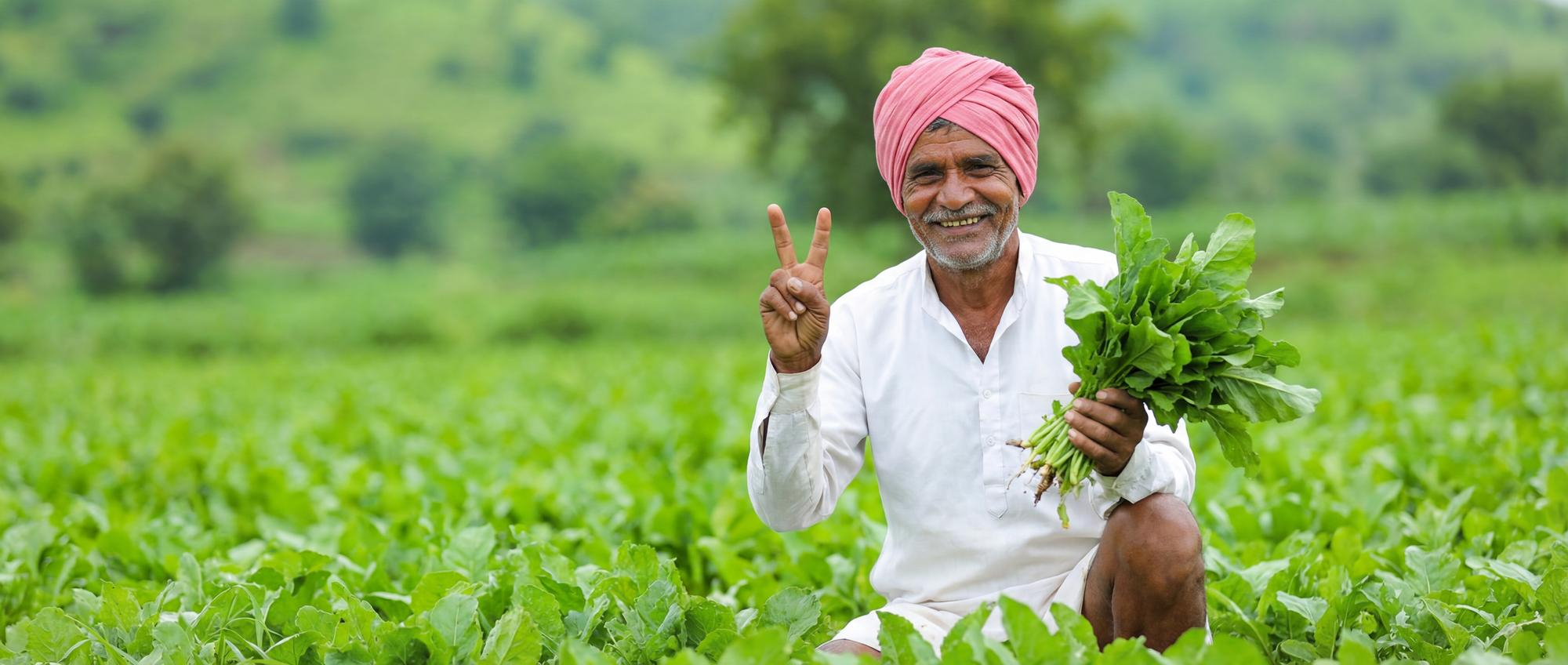
Kisan Divas, observed on December 23, celebrates India’s farmers, the Anna Data of the nation. It marks the birth anniversary of Chaudhary Charan Singh and recognises the role farmers play in ensuring food security, economic stability, and agricultural self-sufficiency.
December 23 is observed as Kisan Divas (Farmers’ Day) to commemorate the birth anniversary of Chaudhary Charan Singh, India’s Prime Minister from July 1978 to January 1979 and a strong advocate of land and agricultural reforms.
In January 1979, Singh also served as Deputy Prime Minister and Finance Minister. The Union Budget he presented in February 1979 stood out as one of the most farmer-centric budgets India has seen, setting a benchmark that remains unmatched.
Kisan Divas was officially declared in 2001. The day honours India’s farmers, often called Anna Data, meaning “providers of food”, who form the backbone of the country’s food security and rural economy.
India’s farming community is vast. Over 120 million people are engaged in agriculture, according to data from schemes such as PM-Kisan. The 2011 Census recorded nearly 118 million people dependent on farming, while studies suggest that around 70 million rely entirely on agriculture for their livelihood.
More recent assessments indicate that about 20 per cent of rural households depend fully on agriculture, with many others earning partial income from farming-related activities.
Indian agriculture spans a wide spectrum, from small subsistence farms to highly mechanised commercial operations. Farmers continue to face persistent challenges, including debt stress, climate variability, and income volatility. Despite these hurdles, their contribution has been transformational.
India has moved from being heavily dependent on foodgrain imports in the 1960s to becoming self-sufficient in food production. Foodgrain output has risen dramatically from about 50 million tonnes in the late 1960s to over 350 million tonnes today, with record harvests becoming increasingly common.
According to the US Department of Agriculture, Indian farming has gradually diversified since the 1980s. Farmers have reduced the area under foodgrains and expanded cultivation of higher-value crops such as fruits, vegetables, milk, and livestock products. This shift has been supported by economic growth, rising incomes, and changing consumption patterns.
However, India’s agricultural policy framework still largely reflects the Green Revolution approach of the 1960s, which prioritised grain self-sufficiency through investments in irrigation, research, price support mechanisms, and market infrastructure. While this strategy delivered food security, the evolving needs of farmers and consumers now call for further diversification and innovation.
Despite the odds, Indian farmers remain optimistic. A McKinsey survey indicates growing confidence across the sector. Around 76 per cent of farmers expect higher profits over the next two years, driven by improved yields and better price realisations. This marks a sharp improvement from 2022, when only 37 per cent shared that optimism.
Farmers are increasingly adopting digital payments, crop insurance, biological inputs, artificial intelligence, and drone technology to improve productivity and manage risks. These advancements are helping farmers produce more even as the area under cultivation remains largely unchanged.
Conclusion
On Kisan Divas, India salutes the resilience, innovation, and perseverance of its farmers. As the government focuses on boosting oilseed and pulse production and charts its Vision 2047, farmers will remain central to the nation’s growth, food security, and global agricultural role. Their journey from survival to sustainability deserves recognition not just on this day, but every day.